


Page 276 - Gear Technology Solutions
P. 276
surfaces.  In  the  case  of  the  opposite  gear  driving  direction  (clockwise),  the
                   contact of pinion and gear flank is on the coast side which creates the opposite
                   force directions and attracts the gear towards the pinion. This will reduce or
                   eliminate the backlash which leads to an interruption of the lubrication film, fol-
                   lowed by scuffing on the flank surfaces in the area of high sliding velocities.
                   These are the areas with the largest distance to the pitch line [5].


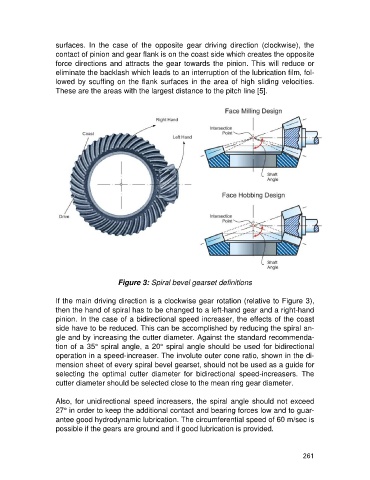
                                        Figure 3: Spiral bevel gearset definitions

                   If the main driving direction is a clockwise gear rotation (relative to Figure 3),
                   then the hand of spiral has to be changed to a left-hand gear and a right-hand
                   pinion. In the case of a bidirectional speed increaser, the effects of the coast
                   side have to be reduced. This can be accomplished by reducing the spiral an-
                   gle and by increasing the cutter diameter. Against the standard recommenda-
                   tion of a 35° spiral angle, a 20° spiral angle should be used for bidirectional
                   operation in a speed-increaser. The involute outer cone ratio, shown in the di-
                   mension sheet of every spiral bevel gearset, should not be used as a guide for
                   selecting  the  optimal  cutter  diameter  for  bidirectional  speed-increasers.  The
                   cutter diameter should be selected close to the mean ring gear diameter.

                   Also, for unidirectional speed increasers, the spiral angle  should  not exceed
                   27° in order to keep the additional contact and bearing forces low and to guar-
                   antee good hydrodynamic lubrication. The circumferential speed of 60 m/sec is
                   possible if the gears are ground and if good lubrication is provided.


                                                                                                     261

