


Page 269 - Gear Technology Solutions
P. 269
The eighth and final step of this development was devoted to re-establishing a
                   sufficient blended Toprem relief along the root of the gear. This was required
                   because the initial relief (step 1) diminished during the previous development
                   steps. A Toprem depth of 3.5mm and a Toprem radius of 35mm was imple-
                   mented only on the coast side gear grinding profile. Figure 18 reflects a highly
                   optimized selective crowning development. Both coast and drive side have a
                   transmission  error  in  the  range  of  only  5mrad.  Yet,  the  selective  protection
                   against edge contact in operation is significant.

                          Conventional Design                    Selective Crowning Design


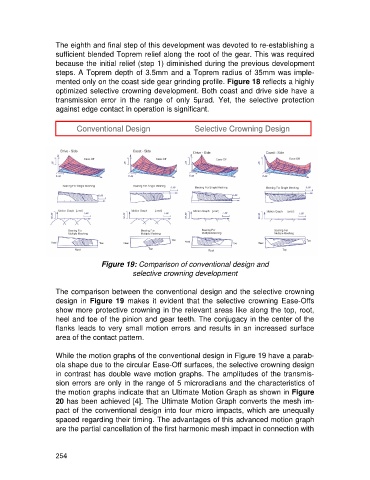
                                   Figure 19: Comparison of conventional design and
                                             selective crowning development

                   The comparison between the conventional design and the selective crowning
                   design  in  Figure  19  makes  it  evident  that  the  selective  crowning  Ease-Offs
                   show more protective crowning in the relevant areas like along the top, root,
                   heel and toe of the pinion and gear teeth. The conjugacy in the center of the
                   flanks  leads  to  very  small  motion errors  and results in an  increased  surface
                   area of the contact pattern.

                   While the motion graphs of the conventional design in Figure 19 have a parab-
                   ola shape due to the circular Ease-Off surfaces, the selective crowning design
                   in contrast has double wave motion graphs. The amplitudes of the transmis-
                   sion errors are only in the range of 5 microradians and the characteristics of
                   the motion graphs indicate that an Ultimate Motion Graph as shown in Figure
                   20 has been achieved [4]. The Ultimate Motion Graph converts the mesh im-
                   pact of the conventional design into four micro impacts, which are unequally
                   spaced regarding their timing. The advantages of this advanced motion graph
                   are the partial cancellation of the first harmonic mesh impact in connection with


                   254

