


Page 255 - Gear Technology Solutions
P. 255
heel to the center, where it has a plateau. From there it rises to the exit point.
                   In all cases, there are very small, neglectable side effects in the single micron
                   range. This  UMC  demonstration  proves that higher  order corrections  can be
                   achieved on one flank, without  noticeable side effects on the opposite flank,
                   although both flanks are manufactured with the same cutter or grinding wheel
                   simultaneously.


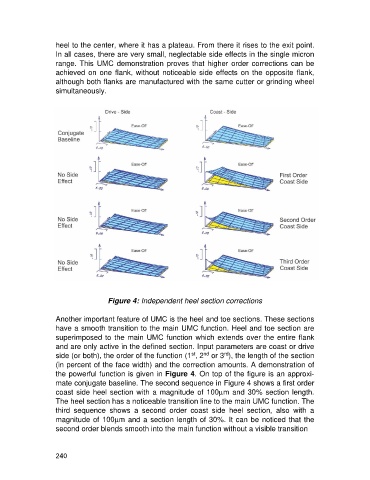
                                     Figure 4: Independent heel section corrections

                   Another important feature of UMC is the heel and toe sections. These sections
                   have a smooth transition to the main UMC function. Heel and toe section are
                   superimposed to the main UMC function which extends over the entire flank
                   and are only active in the defined section. Input parameters are coast or drive
                                                                st
                                                                    nd
                                                                           rd
                   side (or both), the order of the function (1 , 2  or 3 ), the length of the section
                   (in percent of the face width) and the correction amounts. A demonstration of
                   the powerful function is given in Figure 4. On top of the figure is an approxi-
                   mate conjugate baseline. The second sequence in Figure 4 shows a first order
                   coast side heel section with a magnitude of 100mm and 30% section length.
                   The heel section has a noticeable transition line to the main UMC function. The
                   third  sequence  shows  a  second  order  coast  side  heel  section,  also  with  a
                   magnitude of 100mm and a section length of 30%. It can be noticed that the
                   second order blends smooth into the main function without a visible transition


                   240

