


Page 378 - Gear Technology Solutions
P. 378
®
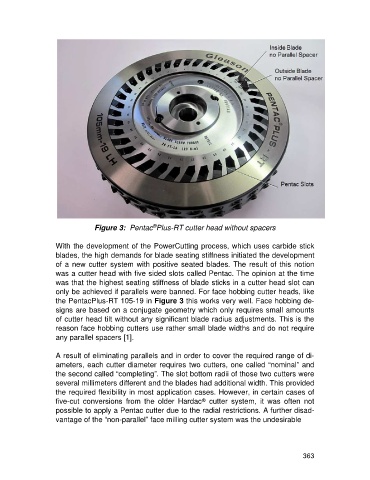
                                Figure 3:  Pentac Plus-RT cutter head without spacers

                   With the development of the PowerCutting process, which uses carbide stick
                   blades, the high demands for blade seating stiffness initiated the development
                   of a new cutter system with positive seated blades. The result of this notion
                   was a cutter head with five sided slots called Pentac. The opinion at the time
                   was that the highest seating stiffness of blade sticks in a cutter head slot can
                   only be achieved if parallels were banned. For face hobbing cutter heads, like
                   the PentacPlus-RT 105-19 in Figure 3 this works very well. Face hobbing de-
                   signs are based on a conjugate geometry which only requires small amounts
                   of cutter head tilt without any significant blade radius adjustments. This is the
                   reason face hobbing cutters use rather small blade widths and do not require
                   any parallel spacers [1].

                   A result of eliminating parallels and in order to cover the required range of di-
                   ameters, each cutter diameter requires two cutters, one called “nominal” and
                   the second called “completing”. The slot bottom radii of those two cutters were
                   several millimeters different and the blades had additional width. This provided
                   the required flexibility in most application cases. However, in certain cases of
                   five-cut  conversions  from  the  older  Hardac   cutter  system,  it  was  often  not
                                                                    ®
                   possible to apply a Pentac cutter due to the radial restrictions. A further disad-
                   vantage of the “non-parallel” face milling cutter system was the undesirable


                                                                                                     363

