


Page 233 - Gear Technology Solutions
P. 233
scheme for such a machine is shown in Figure 8. The modifications are calculated
                   such that the average flank form of all the teeth of a gear with flank form scattering
                   will be identical to a gear without any modifications. Due to the roll position de-
                   pendency of the single tooth corrections, the tooth indexing and tooth thickness
                   will not vary from tooth to tooth, as long as the reference roll position is identical or
                   close to the tooth center point. The following machine motion  modifications are
                   performed:

                   A-axis angle modifications
                   Y-axis position modifications (dependent on A-axis)
                   X-axis position modifications (dependent on A-axis)
                   Z-axis position modifications (dependent on A-axis)
                   The modification axes A, Y, X and Z are labeled in the machine structure shown in
                   Figure 8.


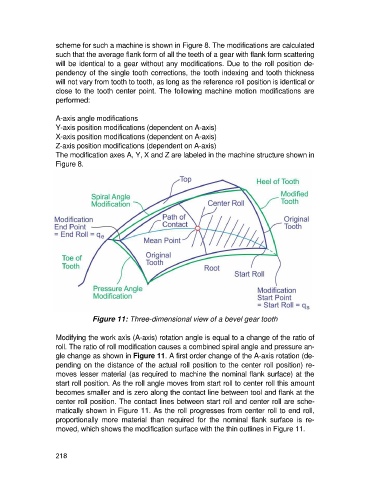
                                Figure 11: Three-dimensional view of a bevel gear tooth

                   Modifying the work axis (A-axis) rotation angle is equal to a change of the ratio of
                   roll. The ratio of roll modification causes a combined spiral angle and pressure an-
                   gle change as shown in Figure 11. A first order change of the A-axis rotation (de-
                   pending on the distance of the actual roll position to the center roll position) re-
                   moves lesser material (as required to machine the nominal flank surface) at the
                   start roll position. As the roll angle moves from start roll to center roll this amount
                   becomes smaller and is zero along the contact line between tool and flank at the
                   center roll position. The contact lines between start roll and center roll are sche-
                   matically shown in Figure 11. As the roll progresses from center roll to end roll,
                   proportionally  more  material  than  required  for  the  nominal  flank  surface  is  re-
                   moved, which shows the modification surface with the thin outlines in Figure 11.


                   218

