


Page 141 - Gear Technology Solutions
P. 141
by  0.3  *  mn  and  the  manufacturing  tool  is  shifted  towards  the  work  axis  by  the
                   same amount. That way the tooth depth stays the same, but the tooth is now at a
                   smaller diameter. This makes the tooth thinner in the root and thicker at the tip.
                   The  tooth thickness  at  the  reference  circle  is  kept constant  in all  profile  shifted
                   cases, which happens automatically in cylindrical gear hobbing when the same
                   hob  is  used  to  cut  gears  with  different  profile  shifts.  The  negative  profile  shift
                   weakens the root of the tooth and also causes undercut, while the positive profile
                   shift reduces or eliminates undercut [3].

                   In bevel and hypoid gears, as well as straight bevel gears, a so called V0 profile
                   shift is always applied. V0 profile shift means that the pinion profile shift coefficient
                   X1 and the gear profile shift coefficient X2 have the same absolute amount but
                   opposite signs (X1 = -X2 or X1 + X2 = 0). In cylindrical gears the V0 profile shift
                   prevents a change of the center distance between pinion and gear. In bevel gears
                   this is analogous to preventing a shaft angle change. This means that a positive
                   profile shift in both members of a bevel gearset would change the shaft angle S
                   by:


                                       DS= (X1 + X2) * mn / Mean Cone Distance

                   If a bevel gearset is designed with a shaft angle of 90°, any profile shift which is
                   not a V0 shift would result in a shaft angle being not equal to 90°, which is not
                   permissible. This is the reason why all state-of-the-art gear design calculation and
                   manufacturing systems strictly apply the V0 profile shift.

                   The side effect of the V0 profile shift is the fact that although a “healthier” pinion
                   profile can be achieved (if X1 is positive), the profile of the mating gear teeth takes
                   an adverse effect. Even a gear with three times the number of pinion teeth will
                   develop undercut from a certain amount of negative profile shift. This means, in
                   turn, the amount of V0 profile shift is limited to the point where the lost root area on
                   the gear teeth above the root fillet (or above the undercut) increases visibly and
                   diminishes the improvement in the pinion teeth profiles.


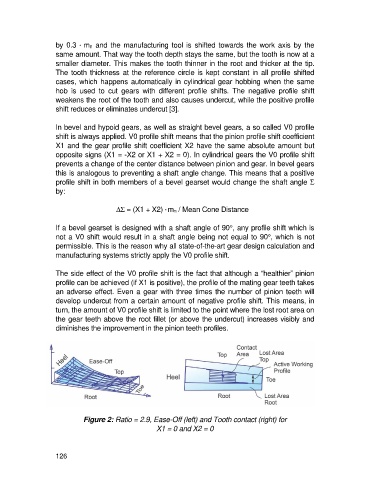
                             Figure 2: Ratio = 2.9, Ease-Off (left) and Tooth contact (right) for
                                                     X1 = 0 and X2 = 0


                   126

