


Page 361 - Gear Technology Solutions
P. 361
hook angle. At the end of each calculation step, the effective cutting edge hook
                   angle  is  calculated  and  the  difference  between  this  number  and  the  desired
                   input value is multiplied with a damping factor and then subtracted from the top
                   rake angle used in the last step. After that, the calculation loop is repeated until
                   the  deviation  between  the  actual  and  the  nominal  value  is  below  the  pre-
                   determined limit.


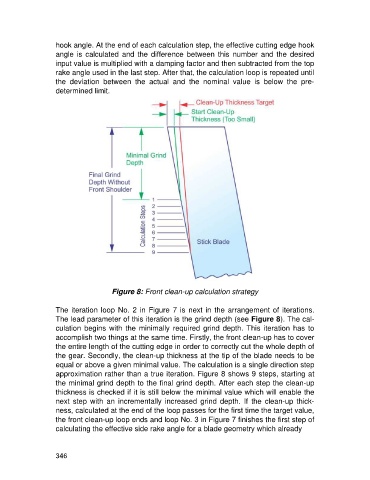
                                      Figure 8: Front clean-up calculation strategy

                   The iteration loop No. 2 in Figure 7 is next in the arrangement of iterations.
                   The lead parameter of this iteration is the grind depth (see Figure 8). The cal-
                   culation  begins with  the  minimally  required  grind depth.  This iteration has to
                   accomplish two things at the same time. Firstly, the front clean-up has to cover
                   the entire length of the cutting edge in order to correctly cut the whole depth of
                   the gear. Secondly, the clean-up thickness at the tip of the blade needs to be
                   equal or above a given minimal value. The calculation is a single direction step
                   approximation rather than a true iteration. Figure 8 shows 9 steps, starting at
                   the minimal grind depth to the final grind depth. After each step the clean-up
                   thickness is checked if it is still below the minimal value which will enable the
                   next  step  with  an  incrementally  increased  grind  depth.  If  the  clean-up  thick-
                   ness, calculated at the end of the loop passes for the first time the target value,
                   the front clean-up loop ends and loop No. 3 in Figure 7 finishes the first step of
                   calculating the effective side rake angle for a blade geometry which already


                   346

