


Page 151 - Gear Technology Solutions
P. 151
As  a  result,  the  nominal  and  required  shaft  angle  S 1  is  re-established  in
                   combination with the desired profile shift. The pitch lines of pinion and gear are not
                   congruent anymore, but the reference pitch lines of pinion and gear are congruent
                   and match the original pitch line. With this two-step approach, an angular profile
                   shift, which is proportional along the face width (direction ROUT) with the distance
                   from the crossing point, is the result. A proportional profile shift is adjusted to the
                   changing tooth depth between toe and heel. The profile shifts of pinion and gear
                   can be chosen individually and independently. There are no negative side effects
                   which would limit the amounts of proportional pinion and gear profile shifts.

                   Applying a global logic would deem that reducing the shaft angle by xj 1 + xj 2,
                   then  calculating  the  new  pitch  angles  and  after  that  adding  xj 1  +  xj 2  to  the
                   reduced shaft angle would arrive at the same tooth proportions as if the angular
                   profile shift was never applied. Despite this global logic, the pre-corrected pitch
                   angles  sustain  when  the  angular  profile  shift  is  added.  The  reason  is  that  the
                   generating ratio (number of generating gear teeth divided by the number of work
                   gear teeth) remains when the profile shift is added, and the nominal shaft angle is
                   established. The pre-correction of the shaft angle in the first step (if X1+X2 >0)
                   reduces the mean diameter of pinion and gear, which also reduces the module.
                   The  profiles  of  pinion  and  gear  will  sustain  their  characteristic  because  the
                   diameter as well as the module have been reduced by the same factor which will
                   maintain the root transitions and just result in a size reduction of the profiles. The
                   angular profile shift in the second step will then change the tooth profile according
                   to Figure 1.

                   Example with Ratio 2.9

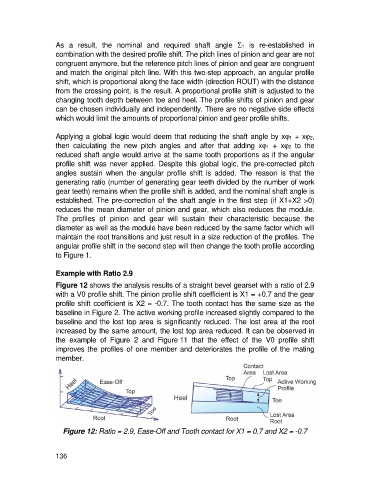
                   Figure 12 shows the analysis results of a straight bevel gearset with a ratio of 2.9
                   with a V0 profile shift. The pinion profile shift coefficient is X1 = +0.7 and the gear
                   profile shift coefficient is X2 = -0.7. The tooth contact has the same size as the
                   baseline in Figure 2. The active working profile increased slightly compared to the
                   baseline and the lost top area is significantly reduced. The lost area at the root
                   increased by the same amount, the lost top area reduced. It can be observed in
                   the  example  of  Figure  2  and  Figure 11  that  the  effect  of  the  V0  profile  shift
                   improves the profiles of one  member  and  deteriorates the  profile of the mating
                   member.


                      Figure 12: Ratio = 2.9, Ease-Off and Tooth contact for X1 = 0.7 and X2 = -0.7


                   136

