


Page 117 - Gear Technology Solutions
P. 117
The forging scale is another undesirable side effect of die forging. In free form
                   forging (Figure 2 left side) the scale flakes off during the forming process. In
                   the  case  of  die  forging,  the  exposure  to  oxygen  is  minimized  and  a  high
                   surface  pressure  is  applied.  As  a  result,  a  very  thin  scale  is  formed  and
                   becomes a permanent part of the surface structure. The thickness of the scale
                   is  between  0.001  to  0.006mm  and  is  dominated  by  its  ferrite  concentration.
                   The forging scale does not form oil pockets like the generating marks of a cut
                   gear.  The  low  relative  speeds  of  differential  gears  require  a  certain  surface
                   structure in order to retain some oil film between the contacting tooth flanks
                   which is ideally given by generating marks rather than by a smooth surface.


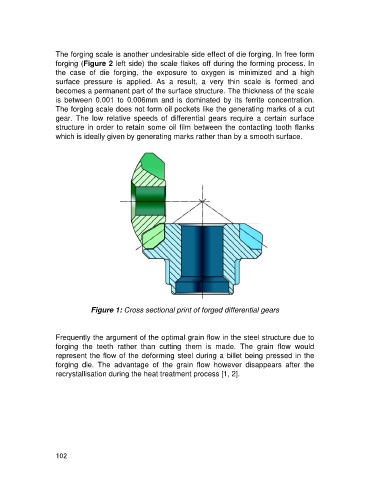
                               Figure 1: Cross sectional print of forged differential gears


                   Frequently the argument of the optimal grain flow in the steel structure due to
                   forging  the  teeth  rather  than  cutting  them  is  made.  The  grain  flow  would
                   represent the flow of the deforming steel during a billet being pressed in the
                   forging  die.  The  advantage  of  the  grain  flow  however  disappears  after  the
                   recrystallisation during the heat treatment process [1, 2].


                   102

