


Page 241 - Gear Technology Solutions
P. 241
The  additional  possibilities  of  distorting  the  sinusoidal  correction  function  with  a
                   frequency and amplitude change between the toe and heel section and the intro-
                   duction of a dwell section have improved the practical results in production even
                   more.

                   Fast Fourier Transformation (FFT) of the single flank test results of a baseline
                   hypoid gearset  are shown in the top  graphic in  Figure  16.  When the Micro-
                   Form was switched on in the grinding machine, the levels of all mesh harmonic
                                                th
                   frequencies (except the 11  harmonic) had been reduced.


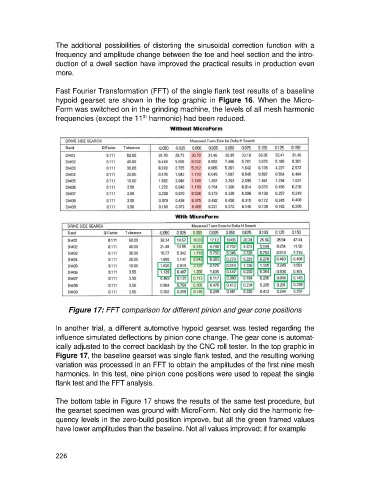
                        Figure 17: FFT comparison for different pinion and gear cone positions

                   In another  trial, a  different automotive hypoid gearset was  tested  regarding the
                   influence simulated deflections by pinion cone change. The gear cone is automat-
                   ically adjusted to the correct backlash by the CNC roll tester. In the top graphic in
                   Figure 17, the baseline gearset was single flank tested, and the resulting working
                   variation was processed in an FFT to obtain the amplitudes of the first nine mesh
                   harmonics. In this test, nine pinion cone positions were used to repeat the single
                   flank test and the FFT analysis.

                   The bottom table in Figure 17 shows the results of the same test procedure, but
                   the gearset specimen was ground with MicroForm. Not only did the harmonic fre-
                   quency levels in the zero-build position improve, but all the green framed values
                   have lower amplitudes than the baseline. Not all values improved; if for example


                   226

