


Page 92 - Gear Technology Solutions
P. 92
6.7   Cleanup Problems in the Case of Undercut and Holdback

                   In cutting and grinding developments it is common to cut or grind a first part or
                   several  slots  with  a  holdback  amount.  Bevel  gear  cutting  and  grinding
                   machines allow such a holdback by entering a holdback value in the summary
                   screen. The holdback is used for example in face hobbing (where the cutting of
                   a  single  test  slot  is  not  possible)  or  in  face  milling  grinding  when  a  first
                   complete test part should be ground in order to check for the correct grinding
                   wheel  wear  compensation  and  also  for  verifying  runout  and  cleanup.  The
                   holdback allows such tests without wasting a good part. After the verification of
                   runout or the development of the wheel wear compensation the same part can
                   be ground without the holdback to its final depth.


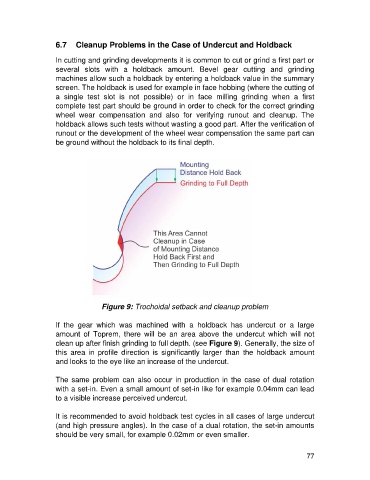
                                   Figure 9: Trochoidal setback and cleanup problem

                   If  the  gear  which  was  machined  with  a  holdback  has  undercut  or  a  large
                   amount  of  Toprem,  there  will  be  an  area  above  the  undercut  which  will  not
                   clean up after finish grinding to full depth. (see Figure 9). Generally, the size of
                   this  area  in  profile  direction  is  significantly  larger  than  the  holdback  amount
                   and looks to the eye like an increase of the undercut.

                   The same problem  can  also occur in  production  in the  case of  dual rotation
                   with a set-in. Even a small amount of set-in like for example 0.04mm can lead
                   to a visible increase perceived undercut.

                   It is recommended to avoid holdback test cycles in all cases of large undercut
                   (and high pressure angles). In the case of a dual rotation, the set-in amounts
                   should be very small, for example 0.02mm or even smaller.


                                                                                                      77

